Follow Us :


Select Language



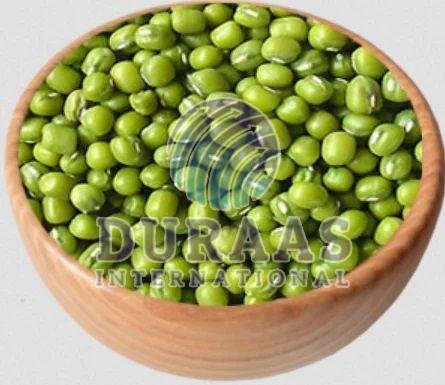
Green Millet / Mung Beans
| Business Type | Exporter, Supplier, Trader |
| Usage/Application | Whole Beans, Sprouted Moong, Curries, Khichdi, Snacks, Moong Flour |
| Shelf Life | 12–24 Months |
| Kernel Size | Typical Export Grades 3–3.5 Mm+ |
| Packaging Options | 25 Kg & 50 Kg Pp / Hdpe / Jute Bags |
| Protein Content | Around 23.5–24% Protein per 100 G Raw Beans |
| Moisture | 12% Max for Premium Grades |
| Purity | Purity ≥ 99–99.7% |
Green Gram (Whole)
Quantity in 1 Full Container Load (FCL) - 24-25 MT (20-Ft); 34-36 MT (40-Ft)
Description- Whole green moong beans are small, round green seeds with a yellow interior, delivering about 23–24% protein, ~1–1.2% fat and ~16% dietary fibre per 100 g, making them one of the most protein‑dense vegetarian pulses. With a mild, nutty flavour and soft texture when cooked, they are used as whole beans in soups and stews, sprouted for salads, or milled into flour (moong besan) for snacks and batter applications.
India is a leading producer and exporter of green gram, with major growing belts in Madhya Pradesh, Maharashtra, Rajasthan, Uttar Pradesh and other central–western states. The crop is typically grown in two seasons – Kharif moong harvested around September–October, and Zaid (summer) moong harvested around May, which supports year‑round availability for export.

| Business Type | Exporter, Supplier, Trader |
| Purity | Purity around 99% |
| Shelf Life | 12–18 Months |
| Color | Clean Yellow Splits, Minimal Green Husk Particles, |
| Application | Dal Curry Soups, Instant Mixes, Snacks, Baby Foods, Flours, Extruded |
| Moisture | Typically ≤ 12% |
| Kernel Size | 3–3.5 Mm Grain Before Splitting |
| Packaging Options | 25 Kg & 50 Kg Pp / Hdpe / Jute Bags |
| Protein Content | 23–24% Protein, ~1% Fat and ~16% Fibre per 100 G Raw Equivalent |
Quantity in 1 Full Container Load (FCL) - 22-24 MT (20-Ft); 34-36 MT (40-Ft)
Description- Split green moong, or moong dal, is produced by dehulling and splitting whole moong into yellow split kernels, which cook faster and give a creamy texture. Nutritionally, moong dal retains most of the whole bean’s 23–24% protein, high fibre and micronutrient profile, while its lower cooking time and digestibility make it a preferred everyday pulse in Indian, South‑Asian and global vegetarian diets.
Moong dal is used for traditional dals, soups, pakoras, savoury pancakes (cheela), sweets, baby foods and instant mixes, and is also milled to make fine flours for snacks and extruded products.

| Business Type | Exporter, Supplier, Trader |
| Usage/Application | Organic Retail Packs, Sprouted Moong, Dal, Soups, Baby Foods, Flours |
| Shelf Life | 12–24 Months |
| Kernel Size | ≥3–3.5 Mm Whole Beans |
| Packaging Options | 25 Kg & 50 Kg Organic Certified Pp / Paper Bags with Inner Liners |
| Protein Content | Around 23.5–24% Protein, ~1.15 G Fat and ~16 G Fibre per 100 G, |
| Moisture | ≤ 12% |
| Purity | ≥ 98–99% Depending On Organic Grade |
Quantity in 1 Full Container Load (FCL) - 24-25 MT (20-Ft); 34-36 MT (40-Ft)
Description- Organic green moong beans are cultivated without synthetic fertilisers or pesticides, under certified organic farming systems, then cleaned and packed in facilities compliant with organic handling standards. They offer the same high protein (≈23–24%), high fibre, low fat nutritional profile as conventional moong, but with residue free positioning that appeals to premium health food, organic retail and baby food markets in Europe, North America and high income Asian countries.
Sourced from certified farms in India’s major moong belts, organic green gram supports buyers who need traceable farm to fork documentation, organic certificates (NPOP / NOP / EU), and detailed COAs.
Leading Exporters, Wholesaler and Trader of Whole Green Millets, Split Green Moong and Organic Green Millet from India.
